
How to Start a Digital Agency Step by Step in 2026
A digital agency is a business that helps companies grow online through services like SEO, paid ads, social media, and website development. In today’s digital-first world, businesses rely heavily on online visibility to generate leads and revenue. According to recent industry reports, global digital ad spending is expected to cross $800 billion, showing massive demand for digital services. This guide is designed for freelancers, beginners, marketers, and developers who want to build a profitable agency from zero, without confusion or unnecessary complexity, using proven strategies.
Types of Digital Agencies You Can Start
There are different types of digital agencies, and choosing the right one depends on your skills and goals. A full-service agency offers multiple services under one brand, while a niche agency focuses on a specific industry like SaaS or local businesses. A service-specific agency specializes in one core service, like SEO or paid ads. Starting with a focused model is often easier, as it helps you build authority faster and attract targeted clients.
10 Steps to Start a Digital Agency from Scratch
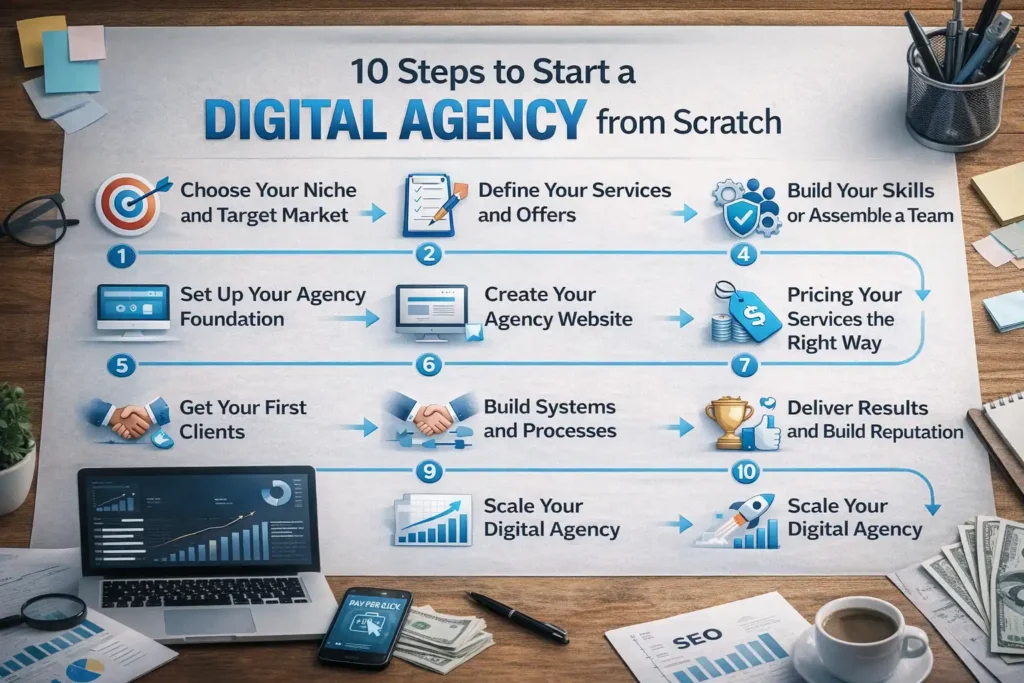
Step 1: Choose Your Niche and Target Market
Choosing a niche is one of the most important decisions when starting a digital agency. Instead of trying to serve everyone, focusing on a specific audience allows you to position yourself as an expert. Research shows that specialized agencies tend to grow faster because they solve specific problems more effectively. Your niche can be based on your skills, experience, or market demand. A clear target market helps you craft better offers, improve marketing, and attract higher-paying clients who value expertise over general services.
Step 2: Define Your Services and Offers
Once you have a niche, the next step is defining your services clearly. Many beginners make the mistake of offering too many services without structure. Instead, you should create focused offers that solve specific problems. According to marketing studies, clear and productized services convert better because clients understand exactly what they are getting. Your goal is to simplify your services into packages that are easy to sell, deliver, and scale without confusion.
Step 3: Build Your Skills or Assemble a Team
At the beginning, you don’t need a large team, but you do need the right skills. You can either learn the core services yourself or outsource the work to experts. Many successful agency owners start solo and gradually build a team as they grow. The key is to ensure quality delivery, because your reputation depends on results. Whether you choose to work alone or with others, your focus should always be on delivering value and maintaining client satisfaction.
Step 4: Set Up Your Agency Foundation
Setting up your agency foundation properly helps you avoid confusion later as you grow. At this stage, your focus should be on building a simple but professional structure that supports your operations. You don’t need to overcomplicate things in the beginning. Many successful agencies start lean and refine systems over time. According to small business data, over 70% of startups begin without formal structures and evolve gradually. The goal here is to create a solid base with branding, communication tools, and basic processes so you can operate efficiently and deliver a professional experience to clients.
Step 5: Create Your Agency Website
Your website is your digital storefront, and in most cases, it’s the first place potential clients will evaluate your business. A well-structured website builds credibility and helps convert visitors into leads. Studies indicate that around 75% of users evaluate a company’s credibility primarily based on the quality of its website design. Even if you are just starting, your site should clearly communicate your services, value, and expertise. You don’t need a complex design, but you do need clarity, a clean layout, and strong messaging that explains how you help clients achieve results.
Step 6: Pricing Your Services the Right Way
Pricing is one of the most challenging parts for beginners, but it directly impacts your profitability and positioning. Many new agency owners underprice their services, which leads to burnout and low-quality clients. Industry data shows that agencies with clear pricing strategies grow faster and retain clients longer. Your pricing should reflect the value you provide, not just the time you spend. Instead of competing on price, focus on outcomes and results. A well-thought-out pricing model helps you build a sustainable business while attracting clients who are serious about growth.
Step 7: Get Your First Clients
Getting your first clients is usually the hardest part, but it becomes easier once you build momentum. The key is to take consistent action and use multiple strategies instead of relying on one method. Research shows that outreach and networking are the fastest ways to land initial clients. At this stage, focus on building relationships rather than chasing quick sales. Your first few clients are crucial because they help you gain experience, testimonials, and confidence, which makes future client acquisition significantly easier and more predictable.
Step 8: Build Systems and Processes
As your agency grows, managing everything manually becomes difficult. That’s where good systems and processes take place in. They help you streamline operations, save time, and maintain consistency. Studies show that businesses with defined processes are more efficient and scalable. Even simple workflows can make a big difference in productivity and client satisfaction. Instead of reacting to tasks, you start operating with structure and clarity. Building systems early allows you to handle more clients without sacrificing quality or increasing stress.
Step 9: Deliver Results and Build Reputation
Delivering consistent results is what turns a small agency into a trusted brand. Your reputation depends on how well you help clients achieve their goals. Research shows that agencies with strong client retention grow faster than those constantly chasing new clients. Instead of focusing only on acquisition, prioritize performance and client satisfaction. Happy clients not only stay longer but also refer others. Over time, your results become your strongest marketing asset, helping you attract better clients and charge higher prices.
Step 10: Scale Your Digital Agency
Scaling your agency means increasing revenue without significantly increasing workload. This requires systems, delegation, and strategic growth. Many agencies struggle to scale because they lack structure or try to grow too quickly. The key is to build a strong foundation first, then expand gradually. Data shows that agencies with clear processes and defined roles scale more efficiently. Whether your goal is $10K or $100K per month, scaling requires a combination of smart hiring, automation, and consistent client acquisition strategies.
Common Mistakes to Avoid When Starting a Digital Agency
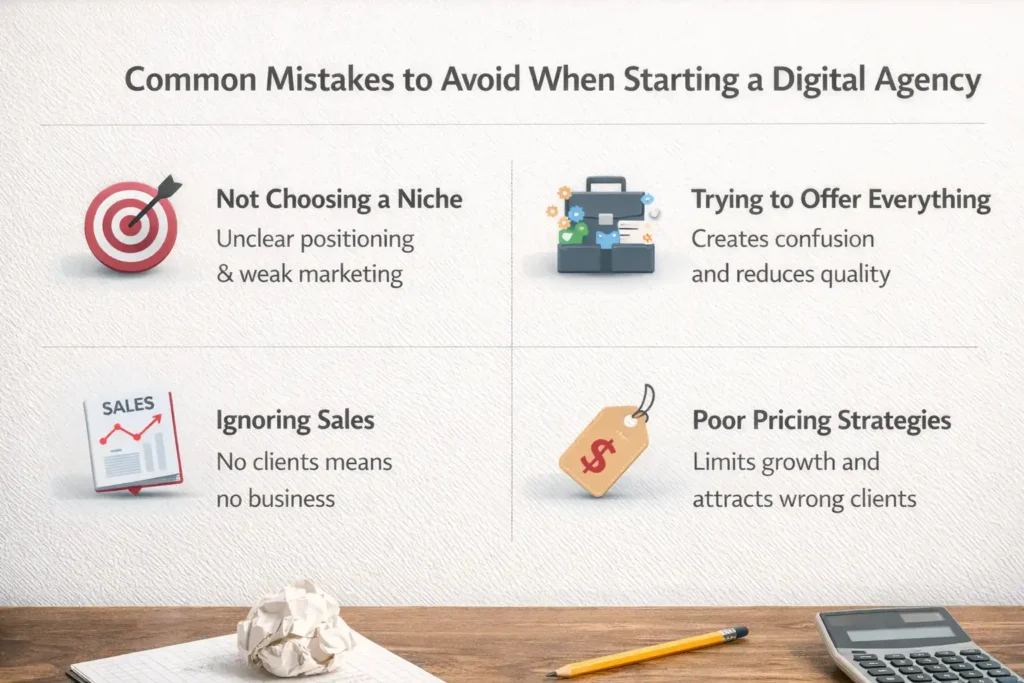
Many beginners make similar mistakes that slow down their growth. Not choosing a niche leads to unclear positioning and weak marketing. Trying to offer everything creates confusion and reduces quality. Ignoring sales is another major issue, as no clients means no business. Poor pricing strategies also limit growth and attract the wrong clients. Avoiding these mistakes early can save time, money, and frustration. Instead, focus on clarity, consistency, and continuous improvement to build a strong and sustainable digital agency.
Tools You Need to Run a Digital Agency
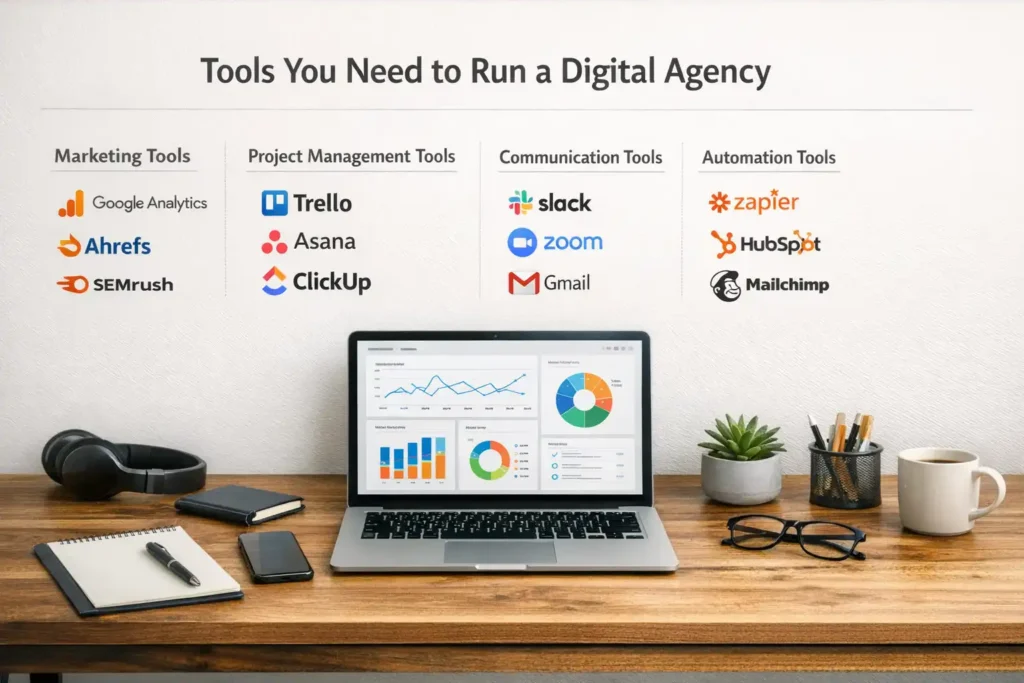
Running a successful digital agency requires the right set of tools to manage work efficiently and deliver consistent results. While you don’t need expensive software at the start, using reliable tools can significantly improve productivity and client satisfaction. According to industry insights, agencies that use structured tools and systems are more likely to scale successfully. The goal is to keep your tech stack simple but effective. Focus on tools that help you manage marketing campaigns, organize tasks, communicate clearly, and automate repetitive work so you can spend more time on growth and strategy.
Marketing Tools
Marketing tools help you execute and optimize campaigns effectively. Platforms like Google Analytics, Ahrefs, and SEMrush provide valuable insights into traffic, keywords, and performance. For paid ads, tools like Google Ads and Meta Ads Manager are essential. These tools allow you to track results, make data-driven decisions, and improve campaign performance consistently over time.
Project Management Tools
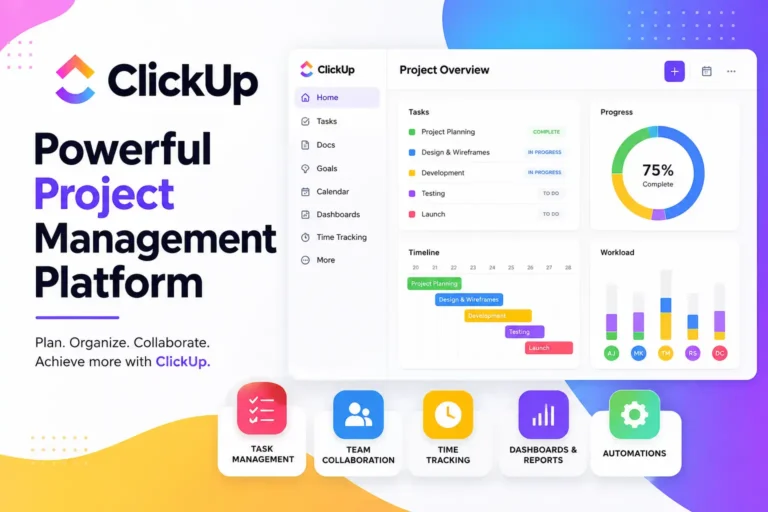
Project management tools keep your work organized and ensure tasks are completed on time. Tools like Trello, Asana, and ClickUp allow you to create workflows, assign tasks, and track progress easily. Clear organization reduces confusion and improves team productivity. Even if you are working solo, having a structured system helps you manage multiple clients efficiently.
Communication Tools
Effective communication is key to maintaining strong client relationships. Tools like Slack, Zoom, and Gmail help you stay connected with clients and team members. Regular communication ensures clarity, builds trust, and prevents misunderstandings. A centralized communication system also makes it easier to manage conversations and keep everyone aligned on project goals.
Automation Tools
Automation tools streamline your workflow by taking care of repetitive tasks automatically, saving you valuable time. Tools like Zapier, HubSpot, and Mailchimp can automate workflows, email campaigns, and client follow-ups. Automation not only increases efficiency but also reduces errors. As your agency grows, using automation becomes essential to maintain consistency and scale operations without increasing workload significantly.
FAQs About Starting a Digital Agency
Starting a digital agency comes with many questions, especially for beginners. Understanding common concerns can help you move forward with confidence. Many people hesitate due to a lack of experience, uncertainty about clients, or doubts about profitability. However, the digital marketing industry continues to grow rapidly, creating opportunities for new agencies. According to market research, businesses are increasing their digital budgets every year, which means demand is strong. Addressing these common questions will help you make informed decisions and take the right steps toward building a successful agency.
Can I Start Without Experience?
Yes, you can start without prior experience, but you need to learn quickly and practice consistently. Many successful agency owners began by learning through online resources and real projects. You can build skills by working on sample projects or helping small businesses. Over time, experience grows naturally as you work with clients.
Do I Need a Website First?
A website helps build credibility, but it is not mandatory in the beginning. You can start by reaching out to clients directly through email or social platforms. However, having a simple website improves trust and makes it easier for clients to learn about your services. It becomes more important as you grow.
How Do I Get Clients Fast?
The fastest way to get clients is through direct outreach and networking. Personalized messages, clear offers, and consistent follow-ups increase your chances of success. Freelance platforms and referrals can also help you find clients quickly. The key is to take action daily and focus on building relationships.
Is a Digital Agency Still Profitable?
Yes, digital agencies remain highly profitable due to increasing demand for online marketing services. Businesses continue to invest in SEO, ads, and content to stay competitive. Profitability depends on your pricing, positioning, and ability to deliver results. With the right strategy, a digital agency can generate high and consistent income.
Conclusion
Starting a digital agency from scratch is one of the most practical ways to build an online business today. It requires low investment, offers high scalability, and allows you to leverage your skills to generate income. The key takeaway is to start simple, focus on a niche, and take consistent action. You don’t need all things perfect at the start. Instead, focus on learning, improving, and delivering results. Take the first step by choosing your niche, defining your offer, and reaching out to potential clients. With persistence and smart execution, you can build a successful and sustainable digital agency.
✨ This is just the start. Follow Tech Fueler for more gems.