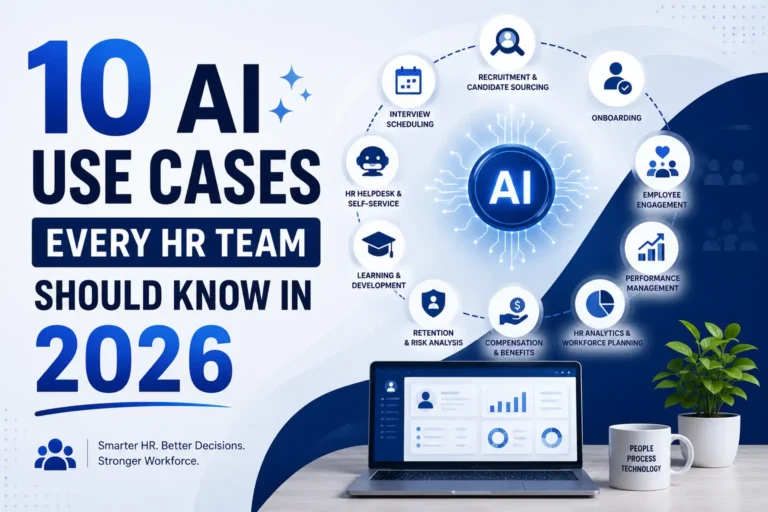
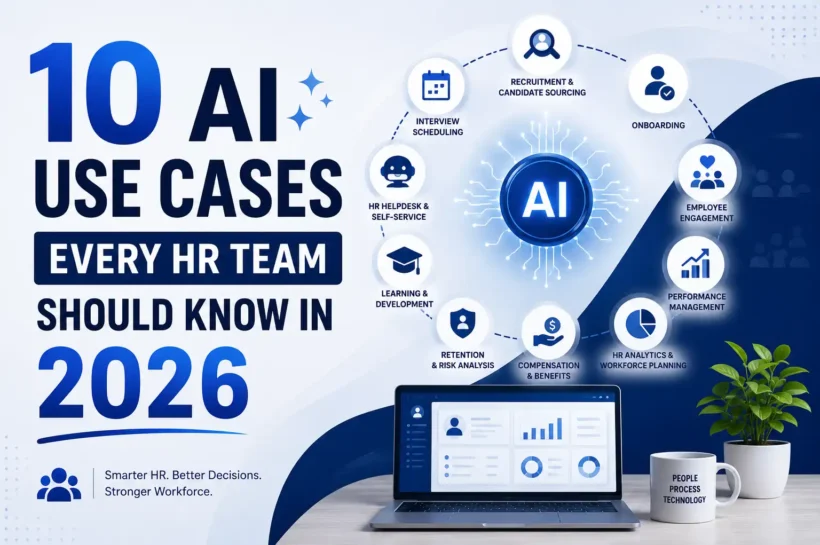

10 AI Use Cases Every HR Team Should Know in 2026
Artificial intelligence is changing how HR teams hire, onboard, and support employees. As organizations manage larger talent pools and growing administrative workloads, AI helps streamline repetitive tasks while giving HR professionals more time to focus on people, culture, and strategic planning. According to the 2025 Deloitte Global Human Capital Trends report, organizations are increasingly investing in AI to improve workforce productivity and decision-making. Rather than replacing HR professionals, AI acts as a powerful assistant that speeds up processes, uncovers valuable insights, and supports more informed hiring and workforce decisions.
In this guide, you’ll discover 10 practical AI use cases every HR team should know, from recruitment and candidate sourcing to employee engagement and workforce analytics. Each section explains how AI works, where it delivers the greatest value, and the benefits organizations can expect. Whether you’re exploring AI for the first time or expanding your existing HR technology stack, these real-world examples will help you understand how AI can improve efficiency while keeping human judgment at the center of every important decision.
1. AI-Powered Recruitment and Candidate Sourcing
Recruitment is one of the most valuable areas for AI because it removes many of the repetitive tasks that slow hiring teams down. Modern AI tools help HR professionals create better job postings, identify qualified candidates, screen resumes, and prioritize applicants based on job requirements. According to LinkedIn’s Future of Recruiting research, talent acquisition teams increasingly use AI to improve hiring efficiency and candidate quality. When combined with human expertise, AI shortens hiring cycles, reduces manual work, and helps recruiters spend more time building relationships with top candidates instead of sorting through hundreds of applications.
2. AI for Interview Scheduling and Candidate Communication
Interview scheduling often becomes one of the most time-consuming parts of the hiring process. AI simplifies this stage by coordinating calendars, sending reminders, answering candidate questions, and maintaining consistent communication from application to interview. According to Gartner, automation helps HR teams reduce administrative work while improving the overall hiring experience. Instead of spending hours exchanging emails, recruiters can focus on evaluating talent and building relationships. The result is a faster, more organized hiring process that benefits both HR professionals and job seekers.
3. AI-Driven Employee Onboarding
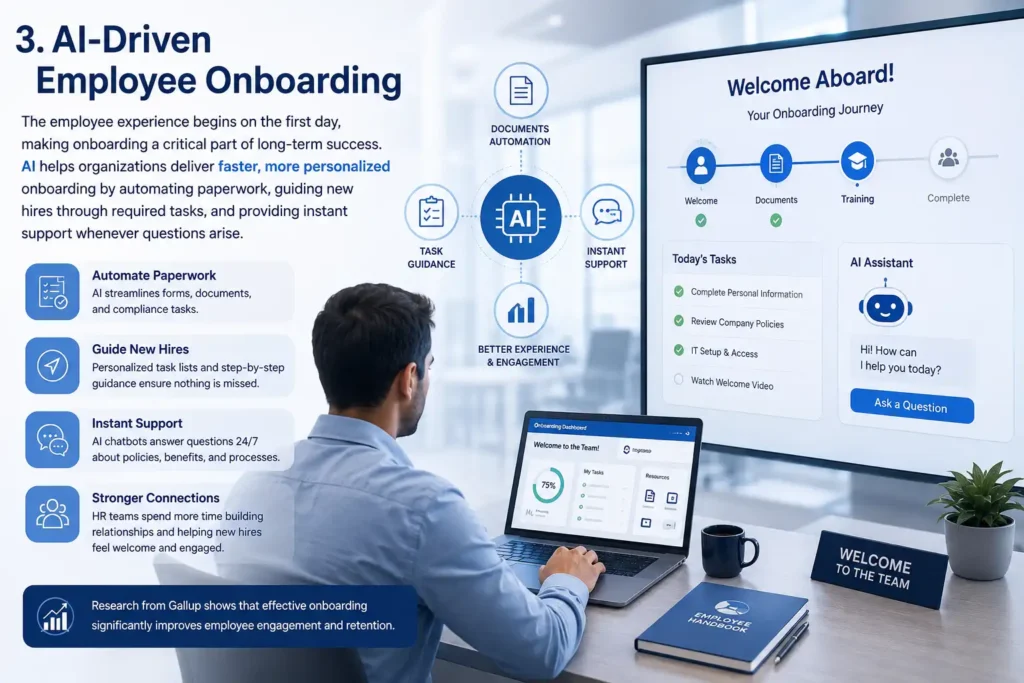
The employee experience begins on the first day, making onboarding a critical part of long-term success. AI helps organizations deliver faster, more personalized onboarding by automating paperwork, guiding new hires through required tasks, and providing instant support whenever questions arise. Research from Gallup shows that effective onboarding significantly improves employee engagement and retention. By reducing manual processes, HR teams can spend more time helping employees build meaningful connections and become productive members of the organization.
4. AI for HR Helpdesk and Employee Self-Service
HR departments receive countless routine questions every day about leave balances, payroll, company policies, and employee benefits. AI-powered helpdesks and self-service tools automate these interactions, giving employees immediate access to accurate information whenever they need it. According to IBM, conversational AI can significantly improve service efficiency while reducing operational costs. This allows HR teams to dedicate more time to strategic initiatives instead of repeatedly answering the same administrative questions.
5. AI in Learning, Upskilling, and Employee Development
Continuous learning has become essential as technology and workplace skills evolve rapidly. AI helps organizations build smarter learning programs by identifying employee strengths, recommending relevant training, and supporting long-term career development. According to the World Economic Forum’s Future of Jobs Report 2025, employers increasingly prioritize reskilling and upskilling to meet changing business needs. AI makes learning more personalized, helping employees grow while enabling organizations to build a stronger, future-ready workforce.
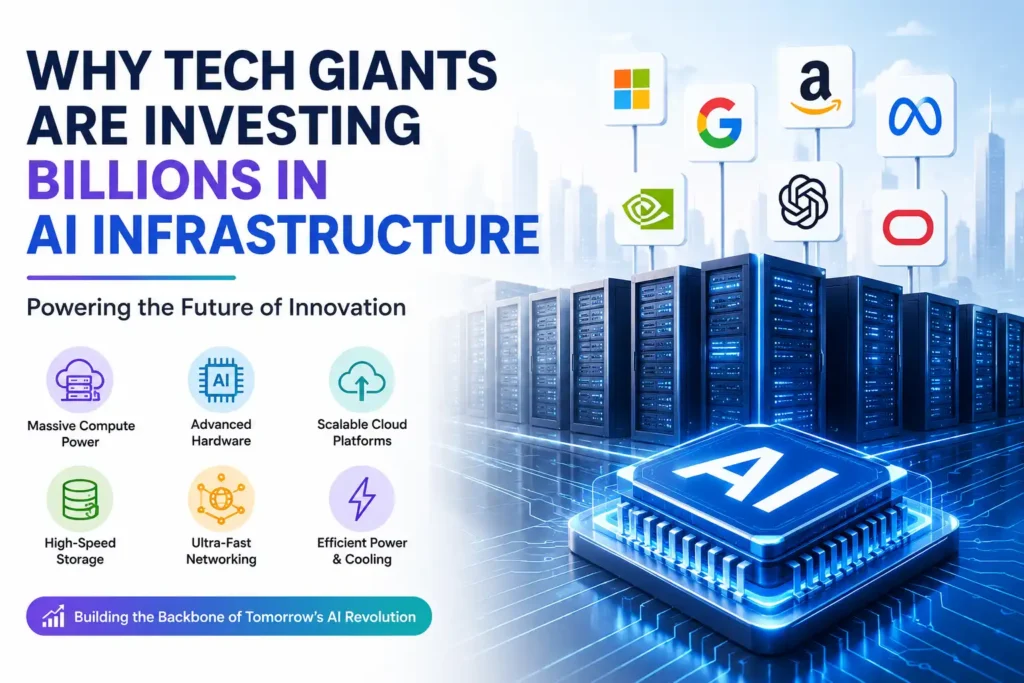
📌 Don’t Miss These Articles: Why Tech Giants Are Investing Billions in AI Infrastructure
6. AI for Performance Management and Employee Feedback
Traditional performance reviews often happen only once or twice a year, making it difficult to identify challenges or recognize achievements in real time. AI transforms performance management by continuously analyzing employee data, tracking goals, and generating meaningful insights throughout the year. According to Deloitte’s 2025 Global Human Capital Trends, organizations are shifting toward continuous performance management supported by data and AI. This approach helps managers provide timely feedback, improve employee development, and make more objective performance decisions based on measurable outcomes rather than personal impressions.
7. AI for Employee Engagement and Retention
Keeping employees engaged has become just as important as hiring great talent. AI helps HR teams understand employee experiences by analyzing feedback, identifying engagement patterns, and predicting retention risks before employees decide to leave. According to Gallup’s State of the Global Workplace report, engaged employees are significantly more productive and less likely to seek new opportunities. By combining AI insights with meaningful human interaction, organizations can create a healthier workplace culture, strengthen employee satisfaction, and improve long-term retention.
8. AI-Powered Workforce Planning and HR Analytics
Successful workforce planning depends on accurate data and the ability to anticipate future business needs. AI strengthens HR analytics by identifying trends, forecasting workforce demands, and helping leaders make informed staffing decisions. According to the World Economic Forum Future of Jobs Report 2025, AI-powered workforce planning is becoming increasingly important as organizations respond to rapid technological change and evolving skill requirements. Better forecasting enables businesses to prepare for growth while minimizing talent shortages and operational disruptions.
📌 Don’t Miss These Articles: Classroom 30X: The Future of AI-Powered Education in 2026
9. AI for HR Compliance, Policy Management, and Documentation
Managing HR compliance requires organizations to stay current with labor laws, maintain accurate records, and ensure employees follow company policies. AI simplifies these responsibilities by automating documentation, monitoring compliance requirements, and organizing HR knowledge. According to PwC, AI-powered compliance tools reduce administrative workload while improving accuracy and consistency. Although legal oversight remains essential, AI helps HR teams reduce manual errors, respond more quickly to regulatory changes, and maintain well-organized documentation across the organization.
10. Best Practices for Implementing AI in HR Successfully
Adopting AI is not just about choosing the right software. Success depends on clear planning, responsible implementation, and continuous evaluation. Organizations that achieve the best results use AI to support HR professionals instead of replacing them. According to McKinsey’s State of AI research, companies generate greater business value when AI is integrated into existing workflows with proper governance and employee training. By following practical implementation strategies, HR teams can improve efficiency, reduce risk, and maximize the long-term value of their AI investments.
5 Best AI Tools Used in HR
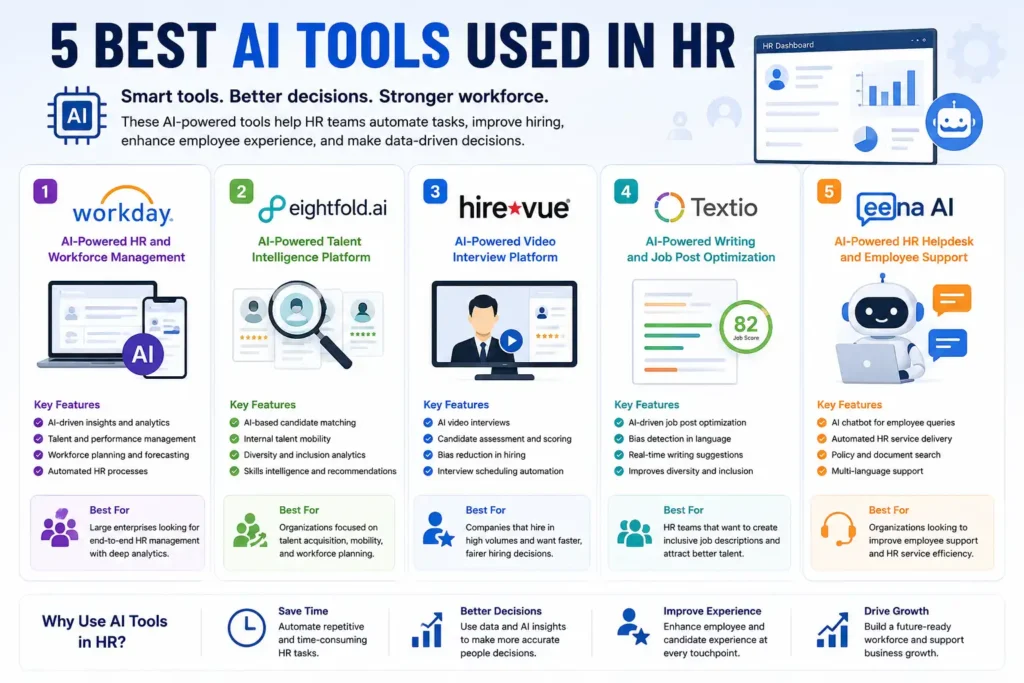
AI-powered HR platforms help organizations automate hiring, improve employee experiences, and make better workforce decisions. The right tool depends on your company size, hiring needs, and HR goals, but several platforms consistently stand out for their AI capabilities. Below are five of the best AI tools that HR teams use to streamline daily operations while improving productivity and decision-making.
1. Workday
Workday is one of the leading AI-powered human capital management (HCM) platforms for medium and large organizations. Its AI features support talent acquisition, workforce planning, skills management, and employee analytics. HR leaders use Workday to identify skill gaps, forecast workforce needs, automate routine tasks, and gain real-time insights for strategic decision-making.
2. LinkedIn Talent Solutions
LinkedIn Talent Solutions uses AI to help recruiters source qualified candidates, recommend potential hires, and create targeted job advertisements. Its intelligent matching algorithms analyze skills, experience, and career history, allowing recruiters to identify suitable candidates faster while improving hiring efficiency and candidate quality.
3. Paradox (Olivia)
Paradox, powered by its AI assistant Olivia, automates candidate communication throughout the hiring process. It schedules interviews, answers applicant questions, sends reminders, and keeps candidates engaged 24/7. This significantly reduces administrative work while creating a faster and more responsive recruitment experience.
4. Eightfold AI
Eightfold AI is a talent intelligence platform that uses deep learning to improve recruiting, internal mobility, workforce planning, and employee development. The platform analyzes employee skills, career potential, and organizational needs to recommend candidates, learning opportunities, and career paths, helping organizations build stronger long-term talent strategies.
5. SAP SuccessFactors
SAP SuccessFactors combines AI with comprehensive HR management features, including recruiting, onboarding, learning, performance management, and workforce analytics. Its AI capabilities provide personalized learning recommendations, automate HR workflows, and generate actionable workforce insights that help organizations improve employee performance and business outcomes.
5 Best Tips to Use AI in HR
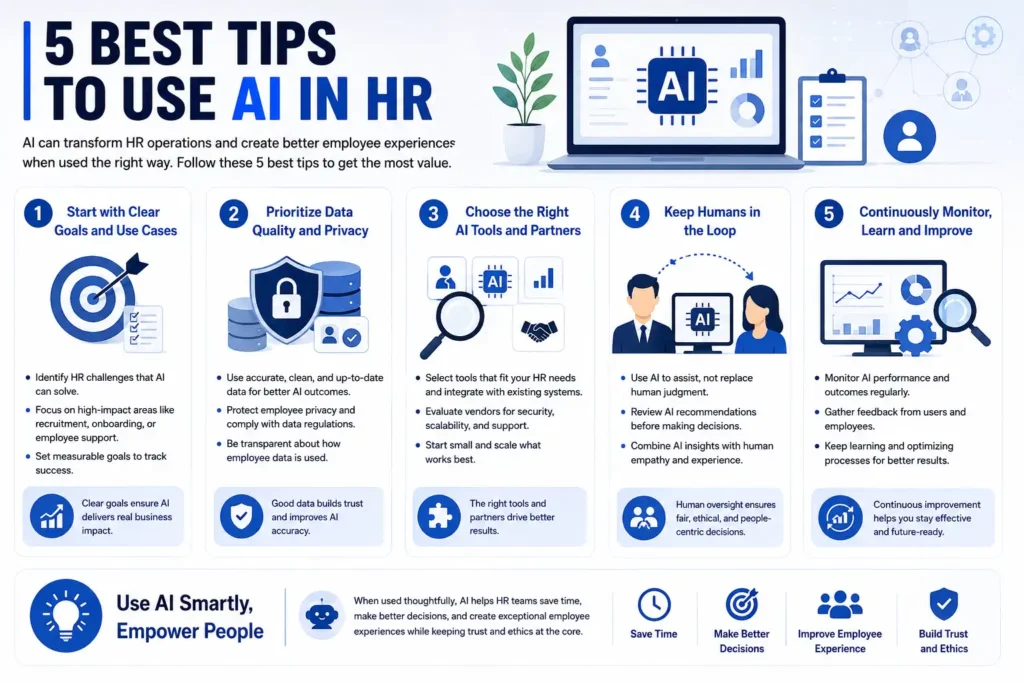
Successfully adopting AI in HR requires more than implementing new technology. Organizations should focus on practical, people-centered strategies that improve efficiency while maintaining fairness and transparency. By introducing AI gradually, training employees, and regularly monitoring results, HR teams can maximize the value of their investment. The following best practices help organizations use AI responsibly while improving recruitment, employee experience, workforce planning, and overall HR operations.
1. Start with Simple, High-Impact Tasks
Begin by automating repetitive HR activities such as resume screening, interview scheduling, employee onboarding, and answering common HR questions. These processes deliver quick results, reduce administrative workload, and allow HR teams to gain confidence before expanding AI into more complex areas.
2. Keep Human Judgment at the Center
AI should support decision-making, not replace it. Important HR decisions involving hiring, promotions, employee relations, and performance evaluations should always include human oversight. Combining AI insights with professional experience leads to fairer, more balanced, and ethical outcomes.
3. Use High-Quality and Secure Employee Data
AI performs best when it analyzes accurate, complete, and well-organized information. Regularly update employee records, remove duplicate data, and choose AI platforms with strong security features. Protecting sensitive employee information helps maintain trust while supporting reliable AI recommendations.
4. Train HR Teams to Work with AI
Providing AI tools is only the first step. HR professionals should understand how AI generates recommendations, recognize its limitations, and know when human intervention is necessary. Ongoing training helps teams use AI confidently while making informed and responsible decisions.
5. Measure Results and Continuously Improve
Track important HR metrics such as time-to-hire, recruitment costs, employee engagement, onboarding completion, and productivity after implementing AI. Reviewing these results regularly helps organizations identify improvement opportunities, optimize workflows, and ensure AI continues delivering measurable business value over time.
Frequently Asked Questions (FAQs)
What Is AI in Human Resources?
AI in human resources refers to the use of artificial intelligence technologies to automate routine HR tasks, analyze workforce data, improve recruitment, support employee development, and enhance decision-making. AI helps HR professionals work more efficiently while allowing them to focus on strategic initiatives and employee relationships.
What Are the Biggest Benefits of AI for HR Teams?
Some of the biggest benefits include faster recruitment, automated administrative tasks, improved employee engagement, personalized learning, better workforce planning, enhanced compliance management, and data-driven decision-making. AI also reduces manual workload, allowing HR professionals to spend more time on high-value activities that improve business outcomes.
Can AI Replace HR Professionals?
No. AI is designed to assist HR professionals rather than replace them. While AI can automate repetitive tasks and analyze large amounts of data, human judgment remains essential for hiring decisions, conflict resolution, leadership, employee relations, coaching, and building a positive workplace culture.
Which HR Tasks Are Best and Most Suitable for AI Automation?
AI is most effective for repetitive and data-intensive tasks such as resume screening, interview scheduling, onboarding workflows, payroll inquiries, leave management, employee self-service, performance reporting, document management, workforce analytics, and compliance monitoring. These tasks benefit from automation while allowing HR teams to focus on strategic responsibilities.
How Can Small Businesses Use AI in HR?
Small businesses can adopt affordable AI tools for applicant tracking, interview scheduling, employee onboarding, HR chatbots, payroll support, and learning management. Many cloud-based HR platforms now include built-in AI features that help smaller organizations improve efficiency without requiring large budgets or dedicated technical teams.
📌 Don’t Miss These Articles: Google One: Plans, Features, AI Tools & Benefits Guide
Conclusion
Artificial intelligence is transforming human resources by helping organizations recruit smarter, onboard employees faster, improve workforce planning, and deliver better employee experiences. While AI automates repetitive administrative work and provides valuable data-driven insights, people remain at the center of every successful HR strategy. The most effective organizations use AI to enhance human expertise instead of replacing it.
As AI technology continues to evolve, HR teams that adopt it responsibly will be better prepared to attract top talent, improve employee engagement, and make more informed business decisions. By starting with practical use cases, maintaining strong governance, and continuously measuring results, organizations can unlock the full potential of AI while building a more productive, efficient, and people-focused workplace.
✨ Keep exploring, keep learning, keep growing with Tech Fueler.