
Introduction
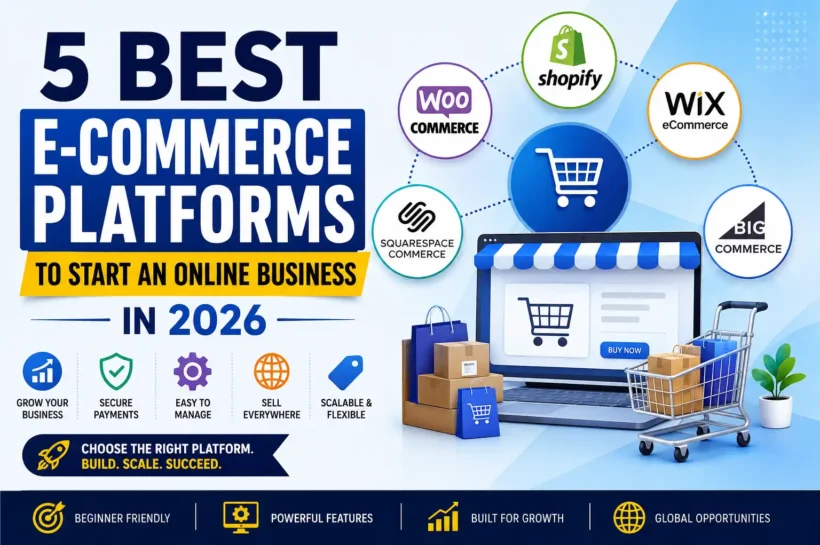
The e-commerce industry continues to grow rapidly as more businesses move online to reach global customers. According to Statista, global e-commerce sales are expected to exceed $8 trillion by 2028, making online selling more competitive than ever. Choosing the right e-commerce platform plays a major role in how successfully a business can scale, market products, and manage operations. A good platform should offer strong SEO tools, secure payment options, easy customization, and a smooth user experience. In this guide, we will explore the five best e-commerce platforms that help businesses build professional online stores and increase long-term revenue.
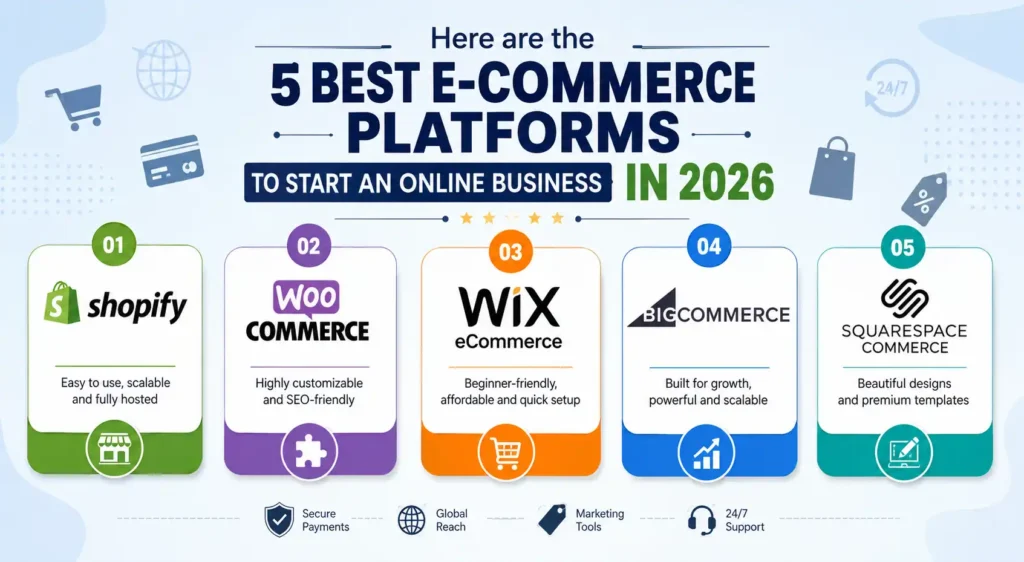
Here are the 5 Best E-Commerce Platforms To Start an Online Business in 2026
Shopify
Shopify has become one of the most trusted e-commerce platforms globally because of its simplicity, scalability, and extensive feature ecosystem. More than four million websites reportedly use Shopify worldwide, making it a dominant force in online retail. The platform offers an all-in-one solution that helps businesses create, manage, and scale professional stores without advanced technical knowledge. Shopify also provides strong SEO tools, mobile optimization, secure hosting, and multi-channel selling support. Its large app marketplace and automation capabilities make it suitable for startups, growing brands, and enterprise-level companies looking for long-term e-commerce success.
WooCommerce
WooCommerce is one of the most flexible e-commerce solutions available for WordPress users. Unlike fully hosted platforms, WooCommerce gives businesses complete control over customization, SEO, and website management. It powers millions of online stores globally because of its open-source nature and extensive plugin ecosystem. Businesses can customize nearly every aspect of their store while benefiting from WordPress’s strong content marketing capabilities. Although WooCommerce requires separate hosting and maintenance, it remains a popular choice for businesses wanting advanced flexibility, strong SEO performance, and lower long-term operational costs compared to many hosted platforms.
Wix eCommerce
Wix eCommerce has become a popular choice for beginners because of its simplicity, affordable pricing, and beginner-friendly website builder. The platform allows users to create professional online stores without coding knowledge, making it ideal for startups and small businesses entering the digital marketplace. Wix has invested heavily in AI tools, mobile responsiveness, and modern templates to improve user experience and store performance. According to industry reports, millions of websites globally use Wix because of its ease of use and visual customization capabilities. For entrepreneurs looking for a fast and affordable online store solution, Wix remains one of the strongest beginner-focused platforms available today.
💚 You might also like: 10 Best YouTube Channels to Learn Web Development
BigCommerce
BigCommerce is designed for businesses that require advanced scalability, enterprise-level functionality, and multi-channel selling capabilities. The platform is widely recognized for supporting fast-growing brands and large online stores with high sales volumes. Unlike many competitors, BigCommerce includes several advanced features natively, reducing dependence on third-party apps and lowering long-term operational costs. Its strong SEO structure, international selling tools, and B2B capabilities make it highly attractive for medium-to-large businesses. As global e-commerce competition increases, BigCommerce continues to position itself as a powerful solution for brands needing advanced infrastructure and long-term scalability.
Squarespace Commerce
Squarespace Commerce is widely recognized for its visually stunning templates and premium website designs. The platform is especially popular among creative professionals, photographers, artists, fashion brands, and portfolio-based businesses wanting elegant online stores. Squarespace combines website design, blogging, and e-commerce functionality into a single user-friendly platform. Its professionally designed templates help businesses create visually appealing storefronts that strengthen branding and customer engagement. Although it may not provide the advanced scalability of Shopify or BigCommerce, Squarespace remains one of the best solutions for businesses prioritizing aesthetics, simplicity, and content-driven online selling experiences.
Comparison Table of the 5 Best E-commerce Platforms
| Platform | Starting Price | Ease of Use | SEO Features | Customization | Transaction Fees | Scalability | Best For | Overall Rating |
| Shopify | Moderate | Excellent | Strong | High | Additional fees on external gateways | Excellent | All business sizes | 9.5/10 |
| WooCommerce | Low | Moderate | Excellent | Very High | Depends on payment gateway | Excellent | WordPress users | 9.3/10 |
| Wix eCommerce | Affordable | Very Easy | Good | Moderate | Limited extra fees | Moderate | Beginners and small stores | 8.7/10 |
| BigCommerce | Moderate to High | Moderate | Excellent | High | No transaction fees | Excellent | Large businesses | 9.1/10 |
| Squarespace Commerce | Moderate | Easy | Good | Moderate | Minimal fees | Moderate | Creative brands | 8.5/10 |
Which E-commerce Platform Is Best for Your Business?
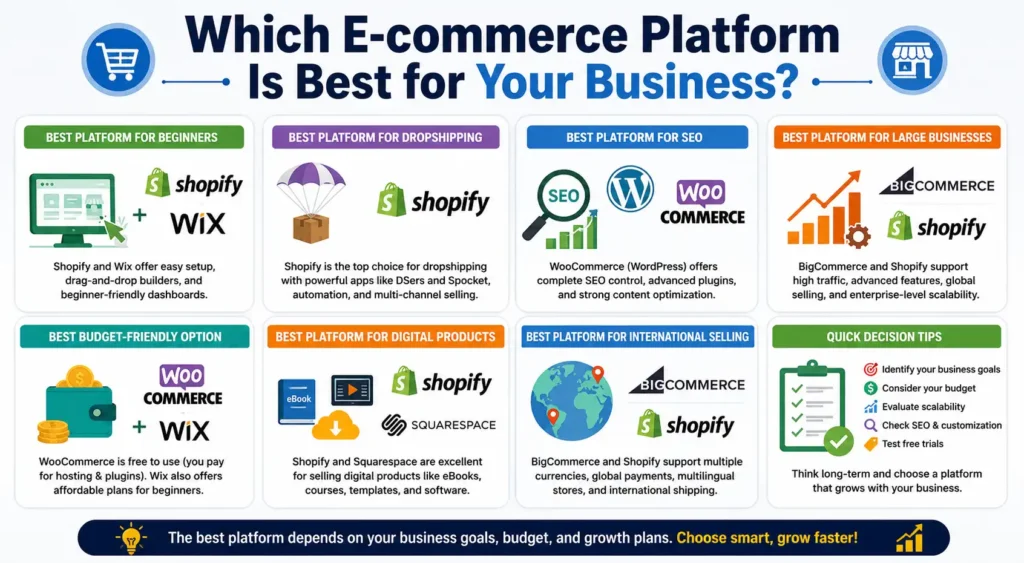
Best Platform for Beginners
Shopify and Wix are excellent choices for beginners because of their user-friendly dashboards and easy setup processes. Both platforms provide drag-and-drop functionality, built-in hosting, and ready-made templates. Beginners can quickly launch stores without coding knowledge, making these platforms ideal for startups and entrepreneurs entering the e-commerce industry for the first time.
Best Platform for Dropshipping
Shopify is widely considered the best platform for dropshipping businesses because of its large app ecosystem and supplier integrations. Tools like DSers and Spocket simplify product importing and order fulfillment. Shopify also supports automation and multi-channel selling, helping dropshipping businesses scale faster while managing operations more efficiently and professionally.
Best Platform for SEO
WooCommerce stands out for SEO because it runs on WordPress, one of the most SEO-friendly content management systems globally. Users gain complete control over metadata, URLs, blogging, and technical optimization. Combined with plugins like Rank Math and Yoast SEO, WooCommerce provides advanced optimization capabilities for improving organic search rankings and website visibility.
Best Platform for Large Businesses
BigCommerce is one of the strongest platforms for large businesses and enterprise-level operations. It supports advanced inventory systems, high traffic volumes, B2B selling, and international commerce. The platform also includes many built-in enterprise features, reducing reliance on third-party applications and improving scalability for rapidly growing online businesses worldwide.
Best Budget-Friendly Option
WooCommerce is often the most budget-friendly option because the core platform is free to use. Businesses only pay for hosting, themes, and optional plugins. Wix also offers affordable starter plans for beginners. These platforms are ideal for entrepreneurs who want to launch online stores without making large initial investments.
Best Platform for Digital Products
Shopify and Squarespace both work exceptionally well for selling digital products such as eBooks, courses, templates, and software downloads. These platforms provide safe payment systems, file download control, and subscription capacity. These features help creators and digital entrepreneurs manage product delivery efficiently while maintaining professional customer experiences.
💚 You might also like: How Claude AI Is Changing the Future of AI in 2026
Best Platform for International Selling
BigCommerce and Shopify are excellent choices for international selling because they support multiple currencies, localized storefronts, and global payment gateways. These features help businesses expand into international markets more effectively. Advanced shipping integrations and multilingual capabilities also improve customer experiences for global audiences and cross-border commerce operations.
Decision-Making Tips for Readers
Before selecting an e-commerce platform, businesses should evaluate long-term scalability, SEO capabilities, customization flexibility, and operational costs carefully. It is important to think beyond short-term convenience and choose a platform that supports future growth. Comparing features, testing free trials, and understanding business goals can help entrepreneurs make more informed decisions confidently.
FAQs About the Best E-commerce Platforms
Which e-commerce platform is best for beginners?
Shopify and Wix are considered the best e-commerce platforms for beginners because they offer user-friendly dashboards, drag-and-drop builders, and simple store setup processes. These platforms allow users to launch online stores quickly without coding knowledge while still providing essential tools for payments, SEO, and inventory management.
What is the most SEO-friendly e-commerce platform?
WooCommerce is widely regarded as one of the most SEO-friendly e-commerce platforms because it runs on WordPress. It gives users full control over URLs, metadata, blogging, and technical SEO settings. Shopify and BigCommerce also provide strong SEO features, but WooCommerce offers more advanced customization flexibility for optimization.
Which platform is best for large online businesses?
BigCommerce and Shopify are excellent choices for large businesses because they support high traffic volumes, advanced integrations, international selling, and enterprise-level scalability. BigCommerce is especially useful for businesses wanting more built-in enterprise features, while Shopify is preferred for ease of management and extensive app support.
Is WooCommerce better than Shopify?
WooCommerce and Shopify both have strong advantages depending on business needs. WooCommerce provides greater customization and SEO control, making it ideal for WordPress users. Shopify, however, offers a fully hosted solution with easier setup, stronger security management, and simplified maintenance for businesses wanting convenience and scalability.
Which e-commerce platform has the lowest costs?
WooCommerce can be the most affordable option because the platform itself is free, although businesses still pay for hosting, plugins, and themes. Wix also offers budget-friendly plans for beginners. However, total costs depend on store size, integrations, payment processing fees, and long-term scalability requirements.
Can I switch e-commerce platforms later?
Yes, businesses can migrate from one e-commerce platform to another later. However, migration can become complex depending on product catalogs, customer data, SEO structure, and integrations. Choosing the right platform from the beginning helps avoid technical challenges, downtime, and additional migration expenses in the future.
Which e-commerce platform is best for dropshipping?
Shopify is one of the best platforms for dropshipping because it supports automation apps like DSers and Spocket. These tools simplify product importing, supplier management, and order fulfillment. Shopify’s scalability and multi-channel selling features also make it easier for dropshipping businesses to grow efficiently.
Are e-commerce platforms mobile-friendly?
Most modern e-commerce platforms are designed with mobile responsiveness in mind. Shopify, Wix, BigCommerce, WooCommerce, and Squarespace all offer mobile-optimized themes and checkout systems. Mobile optimization is essential because a large percentage of global online shopping traffic now comes directly from smartphones and tablets.
What features must an e-commerce platform have?
Important features include SEO tools, mobile responsiveness, secure payment gateways, scalability, customization options, inventory management, and customer support. Businesses should also consider AI automation, multi-channel selling, and analytics tools because these features improve operational efficiency and support long-term business growth in competitive markets.
Which e-commerce platform is best for small businesses?
Shopify, Wix, and Squarespace are excellent options for small businesses because they are easy to use and require minimal technical knowledge. Shopify offers better scalability for long-term growth, while Wix and Squarespace work well for smaller stores and visually focused businesses wanting affordable and simple online selling solutions.
💚 You might also like: Freelancing vs Business: Start Smart in 2026
Conclusion
Choosing the right e-commerce platform is one of the most important decisions for any online business. Platforms like Shopify, WooCommerce, Wix, BigCommerce, and Squarespace each offer unique advantages depending on business size, budget, and technical requirements. Beginners often prioritize simplicity, while growing brands focus more on scalability, SEO, automation, and international selling capabilities.
As e-commerce technology continues evolving, businesses must also consider future trends such as AI automation, mobile commerce, and personalized shopping experiences. By understanding business goals and comparing platform features carefully, entrepreneurs can select the ideal solution that supports long-term growth, customer satisfaction, and sustainable online success.
✨ Keep your knowledge sharp. Follow Tech Fueler.