
Introduction
The internet has made daily life easier, but it has also created new opportunities for scammers. People shop online, pay bills through apps, work remotely, and communicate through social platforms every day. Criminals understand these habits and constantly adapt their methods. Recent internet crime data shows that online fraud losses continue to rise worldwide, with billions of dollars disappearing through digital scams each year. Scammers now use artificial intelligence, fake identities, and social engineering tactics to appear more believable than ever before, making awareness and online safety increasingly important.
Online scams are deceptive activities designed to trick people into sharing money, personal information, or account access. While technology changes quickly, scam methods often follow a similar pattern. Criminals create trust, introduce urgency, and pressure people into taking action without thinking carefully. They may pretend to be banks, government agencies, employers, online stores, or even trusted friends. The goal remains the same: make victims react emotionally rather than logically. Understanding these patterns helps people identify scams before they become serious financial or security problems.
Common Types of Online Scams You Should Know
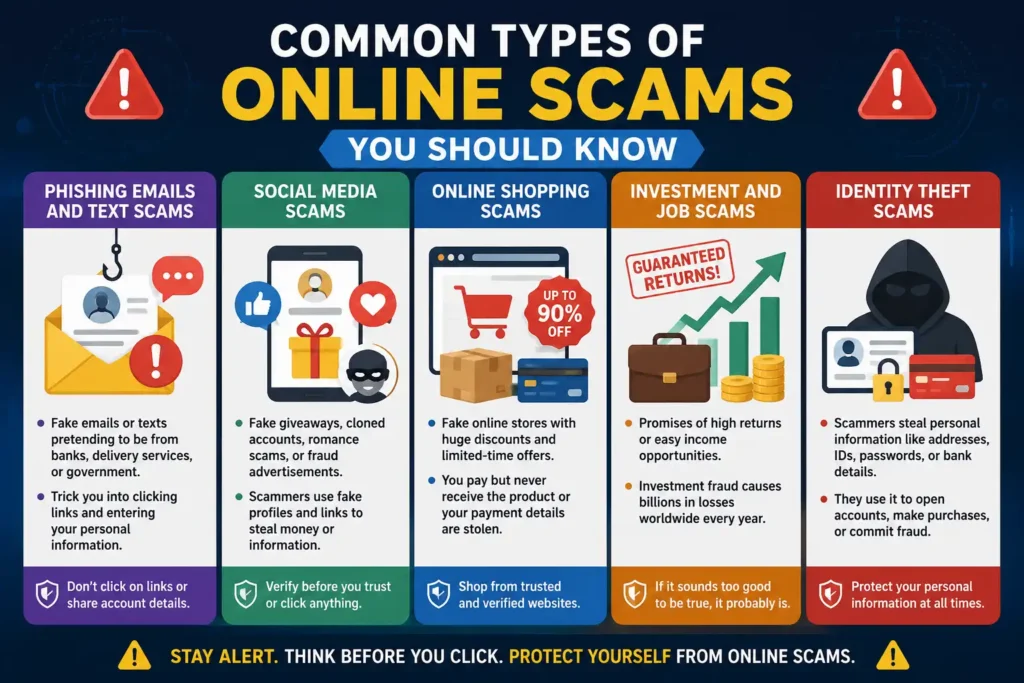
Online scams come in different forms, but many use similar strategies behind the scenes. Some aim to steal money immediately, while others quietly collect personal information over time. Knowing the most common scam categories can help people recognize suspicious behavior early. Modern criminals constantly adjust their methods according to trends and technology. From fake shopping stores to investment schemes, scams continue to evolve. Understanding these major categories allows internet users to identify risks quickly and make smarter decisions before sharing personal or financial details online.
Phishing Emails and Text Scams
Phishing scams usually arrive through emails or text messages pretending to come from banks, delivery services, or government organizations. Users are encouraged to click a link immediately, verify account details, or enter passwords on fake websites designed to steal information.
Social Media Scams
Social media scams often involve fake giveaways, cloned accounts, romance scams, or fraudulent advertisements. Since users naturally trust familiar platforms, scammers exploit that trust and encourage victims to click links or send money without verification.
Online Shopping Scams
Fake online stores attract customers through unrealistic discounts and limited-time offers. Buyers may pay for products that never arrive or unknowingly enter payment details into fraudulent websites designed only to collect financial information.
Investment and Job Scams
Investment and employment scams usually promise quick profits or easy income opportunities. Reports indicate that investment fraud remains among the most financially damaging online crimes, causing billions in annual losses worldwide.
Identity Theft Scams
Identity theft occurs when these persons collect your personal information, such as home addresses, your app passwords, bank details, or other identification numbers. This information may later be used to open accounts, make purchases, or conduct fraudulent activities under someone else’s identity.
5 Best Tips to Protect Yourself From Online Scams
Tip #1
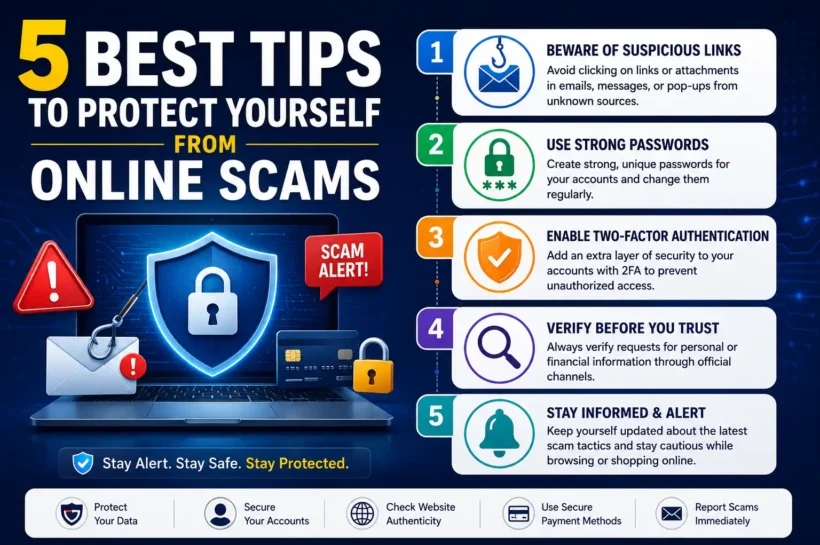
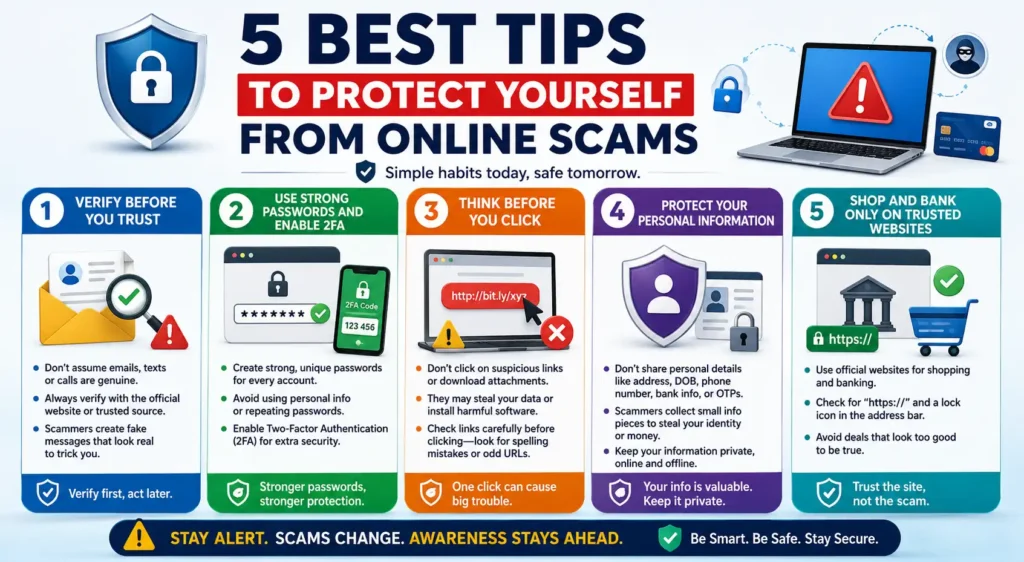
One of the biggest mistakes most people make in this online world is thinking that every message he saw in their inbox is genuine. Modern scammers have become extremely skilled at making fraudulent emails, texts, and phone calls look authentic. They may use company logos, official-looking email addresses, and even customer service language that feels familiar. According to recent cybercrime reports, phishing and spoofing continue to rank among the most commonly reported internet crimes globally. Criminals increasingly rely on urgency and emotional pressure because quick reactions often lead people to ignore warning signs.
Tip #2
Passwords continue to be one of the first lines of defense against cybercriminals, yet many people still use weak or repeated passwords across multiple accounts. A single compromised password can expose email accounts, banking platforms, shopping websites, and social media profiles. Cybercriminals frequently purchase stolen credentials from data leaks and test them on multiple websites. As online account takeover fraud continues to increase, stronger security practices have become necessary rather than optional. Combining strong passwords with additional authentication layers can significantly reduce the chances of unauthorized access.
Tip #3
A simple click can sometimes create significant security problems. Fraudulent links and infected attachments remain among the most effective tools used by cybercriminals. Attackers design malicious links to look harmless by disguising them as invoices, shipping updates, password reset requests, or promotional offers. Once users click these links, they may be redirected to fake login pages or unknowingly install harmful software onto their devices. Cybersecurity reports indicate phishing attacks remain one of the most frequently reported online threats because they continue producing results for attackers.
💚 You might also like: How Claude AI Is Changing the Future of AI in 2026
Tip #4
Many online scams succeed because people unknowingly reveal sensitive information without understanding the possible risks. Personal details such as phone numbers, addresses, banking information, birthdays, and account credentials can become valuable tools for cybercriminals. Scammers frequently collect small pieces of information from multiple sources and combine them to commit identity theft or financial fraud. Social platforms and online forms can sometimes expose more information than users realize. Creating stronger privacy habits significantly reduces the chances of becoming a target for online criminals.
Tip #5
Scammers increasingly create fake websites and mobile applications that appear nearly identical to legitimate platforms. Criminals understand that users often make quick decisions while shopping online or signing up for services. They use attractive discounts, exclusive offers, and urgent promotions to encourage immediate action. Recent cybersecurity warnings have shown that even websites pretending to be trusted organizations can collect personal information from unsuspecting users. Spending a few extra moments verifying online platforms can prevent serious financial losses and identity theft issues later.
What to Do If You Become a Victim of an Online Scam
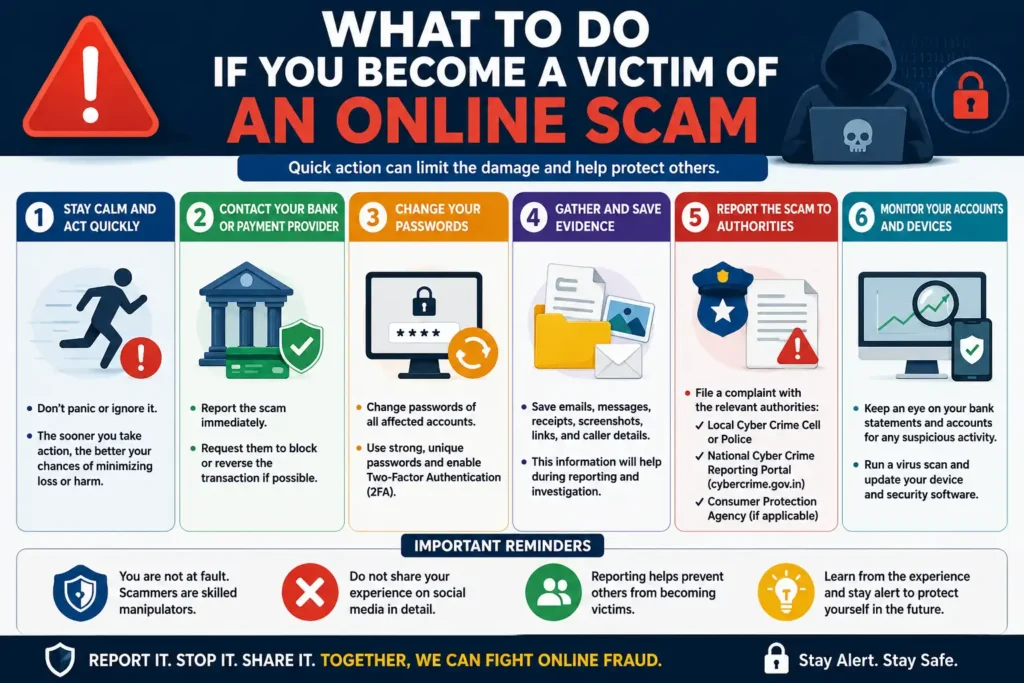
Discovering that you have become a victim of an online scam can feel overwhelming, but taking immediate action can reduce damage and protect your accounts from further risk. Many people delay responding because they feel confused or embarrassed, but scammers depend on that hesitation. Fast action often prevents larger financial losses and reduces opportunities for identity theft. Cybersecurity experts recommend responding immediately after noticing suspicious transactions or unauthorized activity. The sooner protective steps are taken, the higher the chances of limiting the impact and recovering compromised information.
Change Passwords Immediately
If you suspect account access has been compromised, change passwords immediately for affected accounts. Create unique passwords and update any other accounts using similar login credentials to prevent additional security breaches.
Contact Banks or Payment Providers
Contact your bank, credit card provider, or payment service immediately if financial information has been exposed. Many institutions can freeze accounts, block transactions, or investigate unauthorized activity before further losses occur.
Report the Scam
Reporting scams helps authorities track fraudulent activities and identify new cybercrime patterns. Reporting also increases awareness and may help prevent other people from becoming victims of similar scams.
Monitor Accounts for Suspicious Activity
Continue checking account statements, login history, and financial transactions for unusual activity. Some scammers keep stolen information for weeks or months before attempting further fraudulent actions.
5 Tools You Can Use to Protect Yourself From Scams
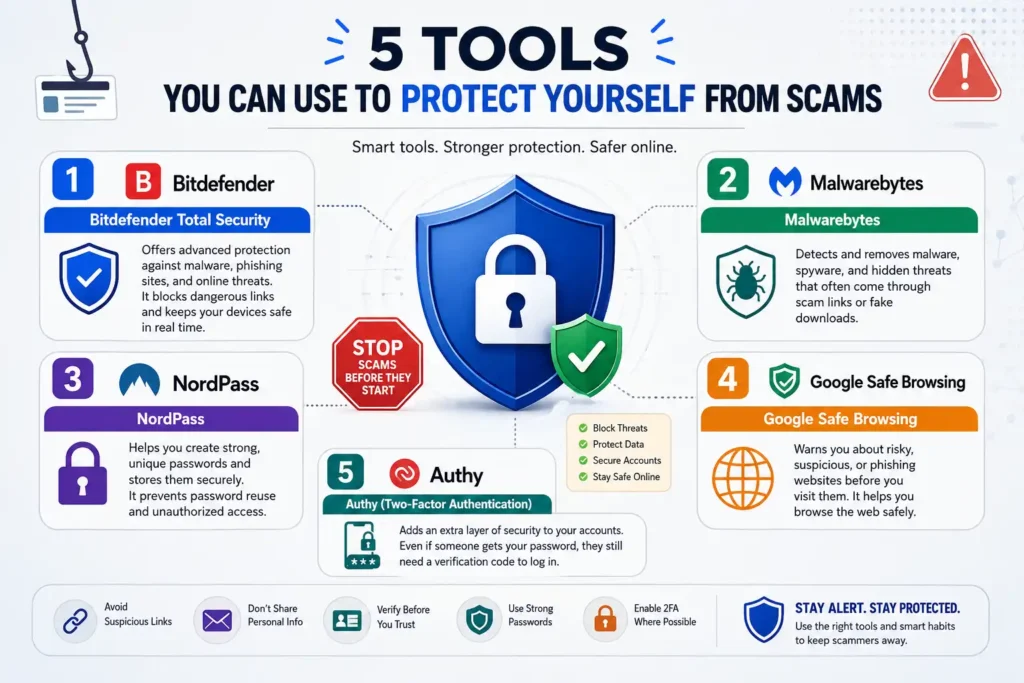
Bitdefender Total Security
Bitdefender Total Security is a comprehensive security tool designed to protect users from various online threats. The software helps create a safer browsing experience by recognizing harmful threats and limiting access to risky online content. The software continuously scans suspicious websites and harmful downloads, helping users avoid fake links and scam websites before they cause damage. It is particularly useful for people who regularly shop, browse, or manage financial activities online.
Malwarebytes
Malwarebytes is widely used for detecting and removing malware, spyware, and other hidden threats that may enter devices through scams or malicious links. Various online scams try to add harmful files in the background, and this tool helps uncover those security risks before they spread. Its real-time protection system can also block dangerous websites and suspicious online activities.
NordPass
NordPass helps users create and manage strong passwords without needing to remember every login credential manually. Weak or repeated passwords remain one of the biggest causes of account breaches. The tool helps users maintain stronger account security by creating unique passwords and storing them in an encrypted environment.
Google Safe Browsing
Google Safe Browsing is a security service designed to identify harmful websites and phishing pages before users interact with them. It works behind the scenes in many popular browsers and warns users when they attempt to access suspicious pages. This extra layer of protection can prevent users from accidentally entering personal information on fake websites.
Authy
Authy adds another security layer by providing two-factor authentication for online accounts. Even if a scammer somehow obtains a password, they still need a secondary verification code to access the account. This additional step significantly improves account security and helps reduce risks related to unauthorized access and identity theft.
Frequently Asked Questions (FAQs)
How can I tell if an online message is a scam?
Scam messages often create urgency, request personal information, or contain suspicious links and attachments. You may also notice spelling mistakes, unusual email addresses, or threats asking for immediate action. Legitimate organizations rarely ask users to share passwords or payment information through random emails or text messages.
What are the most common online scams today?
Some of the most common online scams include phishing emails, fake shopping websites, investment fraud, romance scams, tech support scams, and social media impersonation scams. Cybercriminals continue updating their methods to make scams appear more realistic and trustworthy.
What should I do if I click on a suspicious link?
If you accidentally click a suspicious link, disconnect from unsecured networks, scan your device using trusted antivirus software, and change passwords immediately. You should also monitor accounts for unusual activity and contact your bank if financial information may have been exposed.
Can strong passwords really prevent online scams?
Strong passwords reduce the chances of unauthorized account access significantly. Using unique passwords for every account, combined with two-factor authentication, creates an extra layer of protection that makes it harder for cybercriminals to gain access.
Why do scammers target social media users?
Scammers target social media because users often share personal information publicly. Criminals use profile details, photos, friend lists, and interests to create convincing fake messages, impersonation scams, and phishing attempts that appear trustworthy.
Is online banking safe from scammers?
Online banking can be safe when users follow proper security practices. Using secure passwords, enabling two-factor authentication, avoiding public Wi-Fi for banking, and verifying official banking websites help reduce risks associated with financial scams.
How do fake websites trick people online?
Fake websites often copy the appearance of trusted brands and use similar web addresses to confuse users. Many offer unrealistic discounts or urgent deals designed to pressure visitors into entering payment details or personal information quickly.
What information should never be shared online?
Avoid sharing passwords, banking details, one-time verification codes, social security numbers, and sensitive financial information online. Even small pieces of personal information can help scammers build identity theft or fraud attempts.
Can antivirus software stop all online scams?
Antivirus software improves security but cannot stop every scam. Many scams rely on human manipulation instead of technical attacks. Staying cautious, verifying websites, and thinking carefully before clicking links remain extremely important.
What is the best way to protect yourself from online scams?
The best protection comes from combining multiple safety habits. Use strong passwords, verify suspicious messages, avoid unknown links, protect personal information, and stay informed about the latest scam techniques and cyber threats.
💚 You might also like: AI Cybersecurity Threats and Defense Strategies
Conclusion
Online scams continue changing because cybercriminals constantly adapt to new technology and online behavior. While no security method guarantees complete protection, building strong online habits significantly reduces risk. Using the internet safely means developing smarter habits and verifying information before clicking, sharing sensitive data, or responding unexpectedly. The five tips discussed in this guide can help create a stronger defense against common threats. Awareness remains one of the most powerful tools because informed users are much harder targets for online scammers.
✨ Hungry for more? Follow Tech Fueler and stay updated.