
Introduction
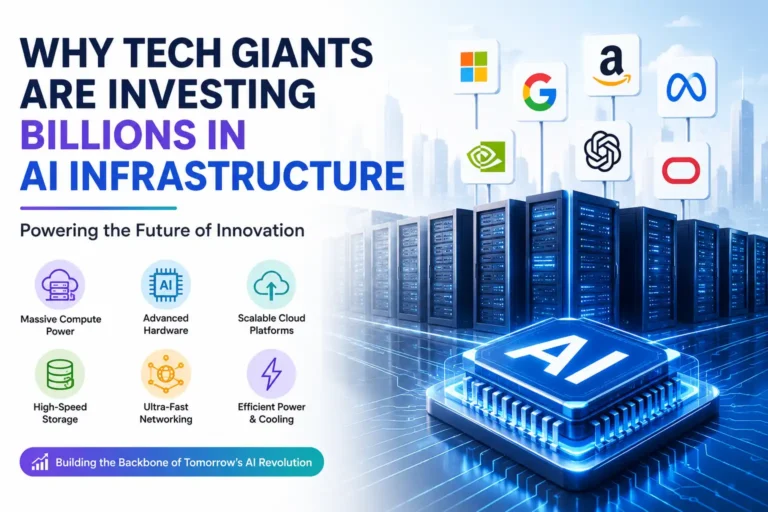
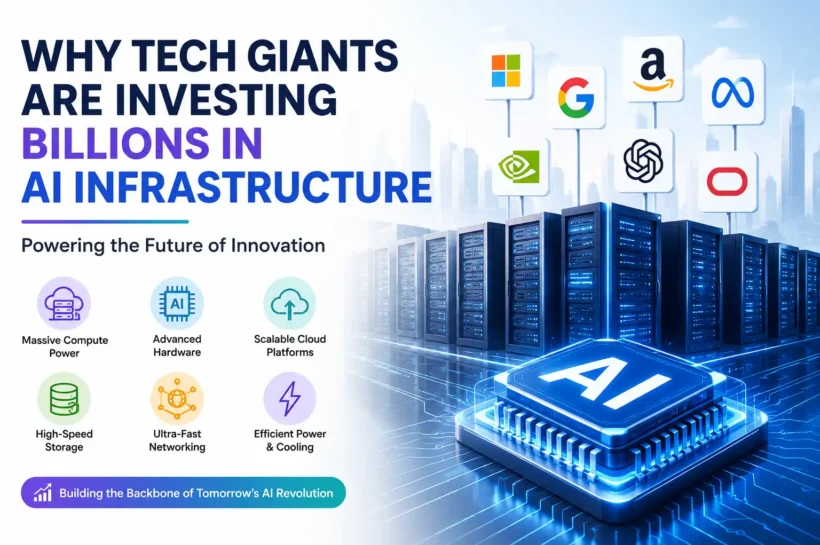
Artificial intelligence has entered a new era where powerful software alone is no longer enough. Behind every advanced AI application is a massive network of hardware, cloud platforms, data centers, and high-speed networking working together. This entire ecosystem is known as AI infrastructure. Unlike traditional IT infrastructure, which mainly supports websites, business applications, and databases, AI infrastructure is specifically built to process enormous amounts of data and perform complex computations at incredible speed. It combines AI-optimized processors, scalable cloud environments, high-capacity storage, and advanced networking to train and deploy sophisticated models efficiently.
Why AI Models Demand Massive Computing Power
Modern AI models perform billions or even trillions of mathematical calculations before producing accurate results. During training, models analyze enormous datasets repeatedly to learn patterns, making this phase extremely compute-intensive. In contrast, inference involves using the trained model to generate responses, recommendations, or predictions for users. Although inference requires less computing power than training, serving millions of daily requests still demands highly scalable infrastructure.
Large Language Models (LLMs) have significantly increased hardware requirements because they contain billions of parameters that must be processed simultaneously. Traditional CPUs cannot efficiently handle these parallel workloads, which is why organizations rely on GPUs, TPUs, and custom AI accelerators designed specifically for machine learning. High-performance computing clusters connect thousands of these processors together, enabling faster model training and deployment. Without specialized hardware, scaling modern AI systems would become prohibitively slow, expensive, and inefficient.
The Key Components of AI Infrastructure
AI Data Centers
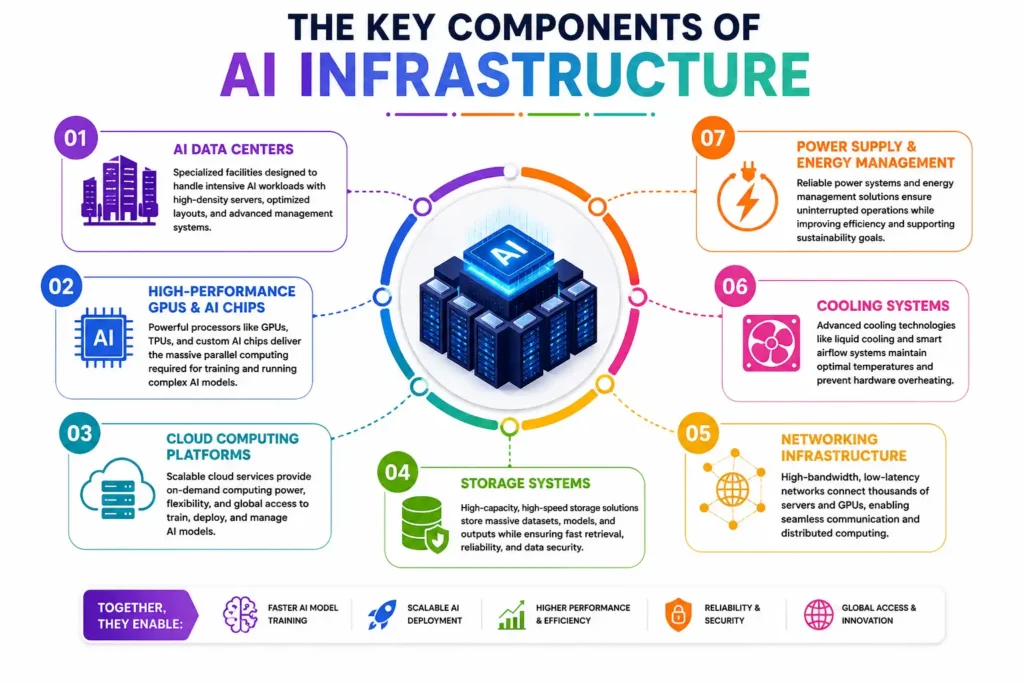
AI data centers are purpose-built facilities designed to support large-scale machine learning workloads. Unlike conventional data centers, they house thousands of AI servers equipped with specialized processors, advanced cooling technologies, and ultra-fast networking. These facilities provide the computing capacity needed to train and serve increasingly complex AI models around the clock.
High-Performance GPUs & AI Chips
Graphics Processing Units (GPUs) and dedicated AI chips are the engines behind modern artificial intelligence. Their ability to process thousands of calculations simultaneously dramatically reduces training times compared to traditional processors. Custom accelerators also improve efficiency, allowing organizations to run larger models while reducing energy consumption and infrastructure costs.
Cloud Computing Platforms
Cloud computing platforms give businesses instant access to powerful AI infrastructure without investing in expensive hardware. Organizations can scale computing resources on demand, deploy AI models globally, and experiment with new applications faster. This flexibility has made cloud services the preferred foundation for enterprise AI development and deployment.
Storage Systems
AI applications generate and process enormous volumes of structured and unstructured data. High-performance storage systems ensure datasets remain accessible during model training while delivering the speed required for continuous learning. Modern storage solutions also provide redundancy, security, and scalability to support growing AI workloads over time.
Networking Infrastructure
Efficient networking connects thousands of processors, servers, and storage devices into a unified AI environment. High-bandwidth, low-latency networks enable rapid data transfer between computing nodes, reducing training bottlenecks. As AI models continue to grow in size, advanced networking technologies have become essential for maintaining peak performance across distributed computing clusters.
Cooling Systems
AI hardware generates substantial heat because of its continuous high-performance computing. Advanced cooling systems, including liquid cooling and innovative airflow designs, help maintain optimal operating temperatures. Effective thermal management not only protects expensive equipment but also improves performance, reduces downtime, and increases the lifespan of AI infrastructure.
Power Supply & Energy Management
Reliable power infrastructure is critical for operating AI facilities that consume enormous amounts of electricity. Modern AI data centers incorporate redundant power systems, intelligent energy management, and renewable energy integration to ensure uninterrupted operations. Optimizing power efficiency helps reduce operational costs while supporting long-term sustainability goals.
💡 Explore More Insights: Classroom 30X: The Future of AI-Powered Education in 2026
Why Tech Giants Are Spending Billions on AI Infrastructure
The race to dominate artificial intelligence has shifted from developing algorithms to building the infrastructure capable of supporting them. Leading technology companies understand that whoever owns the strongest AI infrastructure gains a significant competitive advantage in innovation, cloud services, and enterprise adoption. Massive investments in AI chips, data centers, and networking are creating the foundation for future products while meeting the explosive demand for AI-powered applications. These long-term investments also improve operational efficiency, accelerate research, and enable companies to build complete AI ecosystems that competitors will struggle to replicate.
How Major Tech Companies Are Investing in AI Infrastructure
Artificial intelligence has become the centerpiece of long-term business strategy for the world’s largest technology companies. Rather than focusing solely on developing AI models, these organizations are building the infrastructure required to power future innovation. Their investments span hyperscale data centers, custom AI chips, cloud platforms, high-speed networking, and strategic partnerships. This infrastructure-first approach enables them to support increasingly complex AI workloads, improve service reliability, and meet the growing demand from businesses worldwide. While each company follows a unique strategy, they all share one objective: creating the foundation for the next generation of AI-powered products and services.
Microsoft
Microsoft is expanding its AI infrastructure through Azure by building new hyperscale data centers and deploying thousands of advanced GPUs. Its close partnership with OpenAI has accelerated infrastructure development, allowing Microsoft to deliver enterprise-grade AI services while integrating AI across products like Microsoft 365, GitHub, and Azure AI. The company’s strategy focuses on making AI accessible through its cloud ecosystem.
Google continues to strengthen its AI leadership by combining its global cloud infrastructure with custom Tensor Processing Units (TPUs). The company is optimizing data centers for AI workloads while integrating generative AI across Search, Workspace, and Google Cloud. Its investment strategy emphasizes efficiency, proprietary hardware, and large-scale AI deployment that supports both consumer and enterprise applications.
Amazon
Amazon is investing heavily in expanding AWS infrastructure to meet rising enterprise AI demand. Alongside deploying advanced GPUs, the company has introduced custom AI chips such as Trainium and Inferentia to reduce costs and improve performance. Amazon’s strategy centers on offering businesses flexible, scalable AI infrastructure while supporting developers with managed AI services.
Meta
Meta is building one of the world’s largest AI computing environments to support advanced generative AI research and its open-source models. The company is rapidly expanding GPU clusters and AI-optimized data centers while integrating AI across Facebook, Instagram, WhatsApp, and future metaverse technologies. Its long-term strategy prioritizes large-scale infrastructure capable of powering billions of users.
NVIDIA
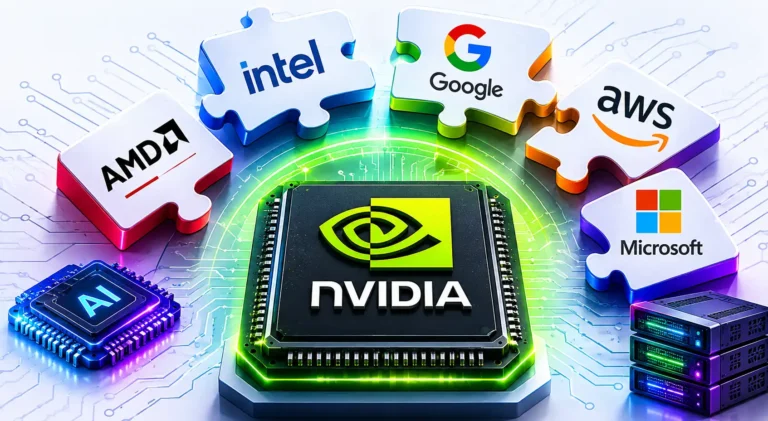
NVIDIA has evolved from a graphics chip manufacturer into the backbone of the AI industry. Beyond producing industry-leading GPUs, the company develops AI networking technologies, software platforms, and complete infrastructure solutions. Its strategy focuses on creating an integrated ecosystem that enables cloud providers, enterprises, and researchers to build high-performance AI systems more efficiently.
OpenAI
OpenAI relies on large-scale cloud infrastructure to train and deploy increasingly capable AI models. Through strategic partnerships with cloud providers, the company gains access to massive computing resources without building independent global infrastructure. Its investment strategy emphasizes scalable compute, continuous model improvement, and expanding AI services for businesses and consumers.
Oracle
Oracle is strengthening its cloud business by expanding AI-ready data centers and partnering with leading AI companies. The company focuses on delivering high-performance infrastructure for enterprise workloads while integrating AI capabilities into its cloud applications and database services. Oracle’s strategy targets organizations seeking secure, scalable AI infrastructure for mission-critical operations.
The Business Benefits Driving These Investments
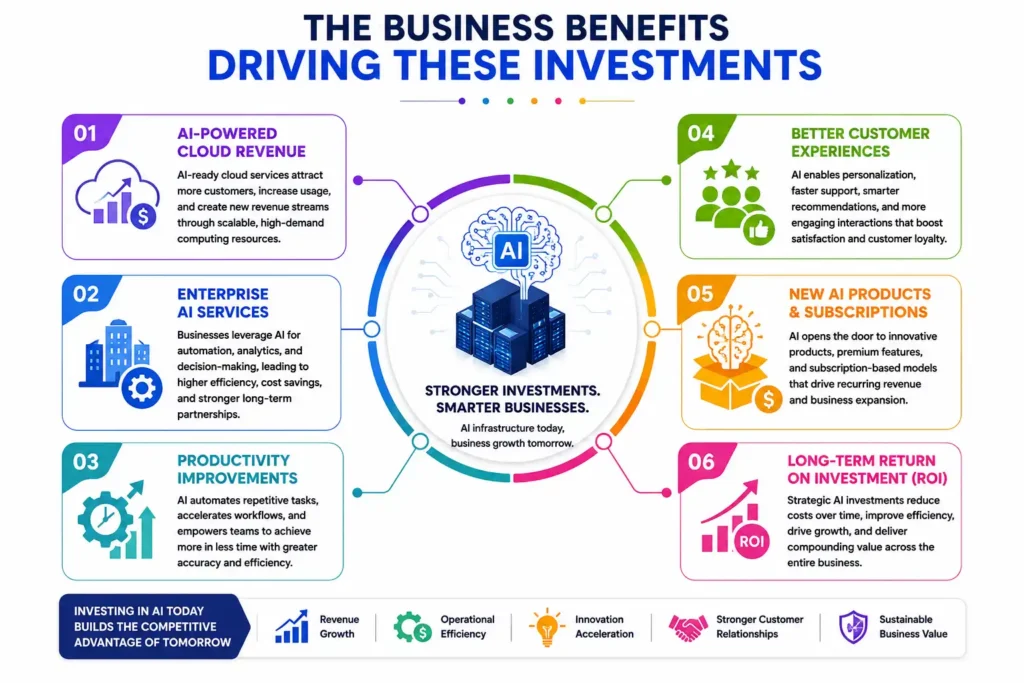
AI infrastructure is not simply a technology upgrade it is a long-term business investment that creates new revenue opportunities and strengthens competitive positioning. By expanding computing capacity, cloud services, and AI capabilities, technology companies can serve more enterprise customers, accelerate innovation, and improve operational efficiency. AI-powered infrastructure also supports new subscription services, intelligent business applications, and automated workflows that generate recurring revenue. As AI adoption continues to expand across industries, organizations with robust infrastructure are better positioned to achieve sustainable growth and maximize returns on their investments.
AI-Powered Cloud Revenue
Cloud providers are generating significant new revenue by offering AI computing resources, managed machine learning platforms, and generative AI services. Businesses increasingly rely on cloud infrastructure instead of purchasing expensive hardware, making AI-powered cloud offerings one of the fastest-growing segments in the technology industry.
Enterprise AI Services
Organizations are adopting AI to automate workflows, analyze data, improve cybersecurity, and enhance decision-making. Technology companies support this demand by offering enterprise AI platforms, APIs, and managed services that simplify AI deployment while creating long-term customer relationships and recurring subscription revenue.
Productivity Improvements
AI infrastructure enables faster software development, automated business processes, and more efficient research. By reducing repetitive tasks and accelerating complex computing workloads, organizations improve employee productivity while shortening development cycles and delivering innovations to market more quickly.
Better Customer Experiences
Companies use AI infrastructure to deliver personalized recommendations, intelligent search, virtual assistants, and real-time customer support. These capabilities improve user satisfaction, increase customer engagement, and strengthen brand loyalty by providing faster and more relevant digital experiences.
New AI Products and Subscriptions
Robust infrastructure allows businesses to launch premium AI-powered services, productivity tools, content generation platforms, and enterprise software. Subscription-based AI offerings create predictable recurring revenue while expanding customer value through continuously improving features and intelligent automation.
Long-Term Return on Investment (ROI)
Although AI infrastructure requires substantial upfront investment, it delivers long-term value through operational efficiency, increased automation, higher cloud adoption, and stronger customer retention. As AI usage grows, infrastructure investments become strategic assets that support sustained profitability and future innovation.
The Biggest Challenges Behind AI Infrastructure Expansion
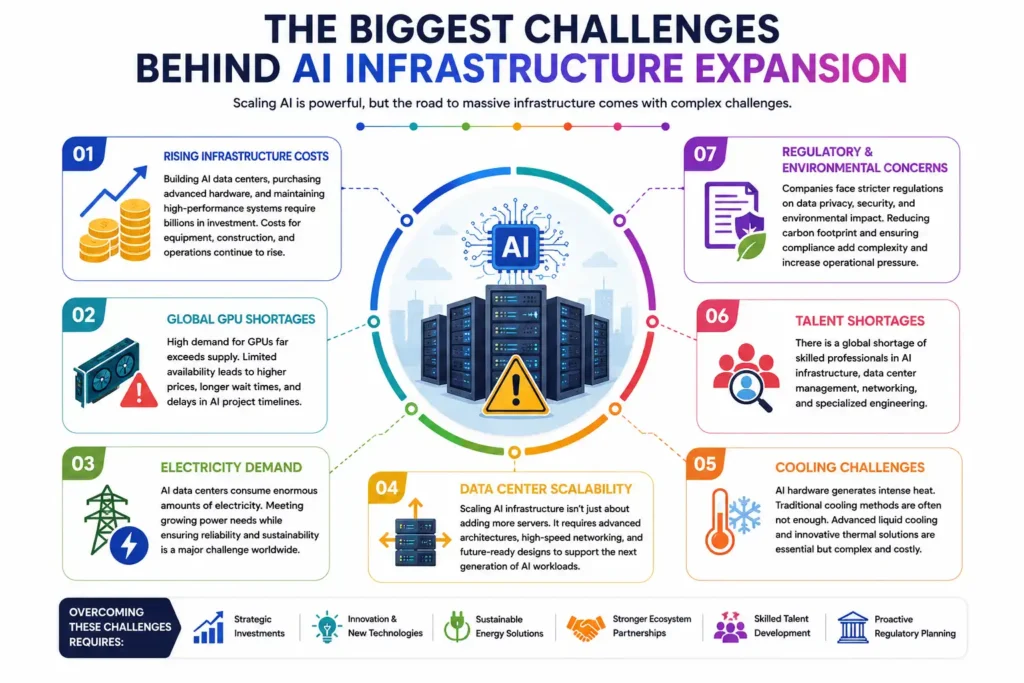
Building global AI infrastructure is a complex and capital-intensive undertaking. While demand for AI continues to grow rapidly, companies must overcome significant technical, financial, and environmental challenges. Expanding data centers, securing advanced hardware, managing energy consumption, and complying with evolving regulations require careful long-term planning. Addressing these obstacles is essential for maintaining reliable AI services while supporting sustainable growth. Companies that successfully navigate these challenges will be better positioned to meet future AI demand and remain competitive in the evolving technology landscape.
Rising Infrastructure Costs
Constructing AI-ready data centers, purchasing advanced processors, and expanding cloud infrastructure require billions of dollars in capital investment. Rising hardware prices, construction expenses, and maintenance costs continue to increase the financial commitment needed to support large-scale AI operations.
Global GPU Shortages
The rapid adoption of generative AI has created intense demand for high-performance GPUs, leading to supply constraints across the industry. Limited availability can delay infrastructure expansion, increase hardware prices, and slow AI deployment for businesses worldwide.
Electricity Demand
Large AI data centers consume enormous amounts of electricity to power thousands of servers continuously. As AI workloads grow, companies must secure reliable energy sources while improving efficiency and incorporating renewable energy to reduce operating costs and environmental impact.
Data Center Scalability
Expanding AI infrastructure requires more than simply adding servers. Companies must design facilities capable of supporting higher computing densities, faster networking, and future hardware generations without compromising reliability or performance as AI demand continues to increase.
Cooling Challenges
High-performance AI hardware generates significant heat, making advanced cooling systems essential for maintaining stable operations. Many organizations are adopting liquid cooling and innovative thermal management technologies to improve efficiency while reducing energy consumption and equipment wear.
Talent Shortages
Building and managing AI infrastructure requires specialists in cloud computing, networking, semiconductor engineering, cybersecurity, and machine learning. The shortage of experienced professionals makes it increasingly difficult for companies to expand infrastructure at the pace required by growing AI adoption.
💡 Explore More Insights: ClickUp: Powerful Project Management Platform
Regulatory and Environmental Concerns
Governments are introducing new regulations covering AI development, data privacy, cybersecurity, and environmental sustainability. Companies must balance rapid infrastructure expansion with compliance requirements while reducing carbon emissions, improving energy efficiency, and addressing public concerns about resource consumption.
How AI Infrastructure Is Reshaping the Global Technology Industry
AI infrastructure is transforming the technology sector far beyond the companies building it. Massive investments in computing resources are reshaping cloud services, semiconductor manufacturing, enterprise software, and global supply chains. The growing demand for AI infrastructure has intensified competition among cloud providers, accelerated innovation in hardware design, and created new opportunities for startups. At the same time, governments are investing in national AI capabilities to strengthen economic growth and technological leadership. This infrastructure revolution is redefining how the global technology industry competes and evolves.
Frequently Asked Questions About AI Infrastructure
What Is AI Infrastructure?
AI infrastructure refers to the complete ecosystem of hardware and software required to build, train, deploy, and manage artificial intelligence models. It includes AI data centers, GPUs, custom AI chips, cloud computing platforms, storage systems, networking equipment, and energy management solutions. Together, these components provide the computing power needed to support modern AI applications at scale.
Why Are Companies Investing Billions in AI?
Companies are investing billions because AI has become a key driver of innovation, productivity, and long-term business growth. Building advanced AI infrastructure enables organizations to develop more powerful models, support growing customer demand, improve cloud services, and create new revenue opportunities. Early investment also provides a strategic advantage in the increasingly competitive AI market.
Why Are GPUs Essential for AI?
GPUs are designed to perform thousands of calculations simultaneously, making them ideal for machine learning and deep learning workloads. Unlike traditional CPUs, GPUs process large datasets much faster, significantly reducing AI training times. Their parallel computing capabilities make them the preferred hardware for developing and deploying today’s most advanced AI models.
Which Companies Are Investing the Most in AI Infrastructure?
Several leading technology companies are making significant investments in AI infrastructure, including Microsoft, Google, Amazon, Meta, NVIDIA, OpenAI, and Oracle. These organizations are expanding AI-ready data centers, developing custom AI chips, increasing cloud computing capacity, and building high-performance networking systems to support future AI innovation and enterprise adoption.
Will AI Infrastructure Spending Continue?
Industry experts expect AI infrastructure spending to continue rising throughout the coming years as AI adoption accelerates across every major sector. Businesses require larger computing resources, more efficient hardware, and scalable cloud platforms to support increasingly sophisticated AI applications. Continued advancements in generative AI will likely drive even greater investment worldwide.
How Does AI Infrastructure Benefit Businesses?
AI infrastructure helps businesses automate repetitive tasks, analyze data more efficiently, improve decision-making, and deliver personalized customer experiences. It also enables faster product development, scalable cloud services, enhanced cybersecurity, and operational efficiency. By investing in reliable AI infrastructure, organizations can innovate more quickly while creating long-term competitive advantages in an AI-driven economy.
💡 Explore More Insights: Acamento :- Modern Digital Team Management Platform (2026)
Conclusion
Artificial intelligence is no longer limited by software innovation alone it is powered by the infrastructure that makes intelligent systems possible. From hyperscale data centers and advanced AI chips to cloud platforms and high-speed networking, AI infrastructure has become the foundation of modern digital transformation. This is why leading technology companies continue investing billions of dollars to expand computing capacity, improve efficiency, and prepare for the next generation of AI applications.
As AI adoption accelerates across industries, the importance of reliable, scalable, and sustainable infrastructure will only continue to grow. Businesses that embrace this technological shift will be better equipped to innovate, improve productivity, and remain competitive in an increasingly AI-driven marketplace. Whether you are a business leader, technology professional, or simply interested in the future of artificial intelligence, understanding AI infrastructure provides valuable insight into the investments shaping tomorrow’s digital economy.
📈 Upgrade your feed with meaningful tech content via Tech Fueler.